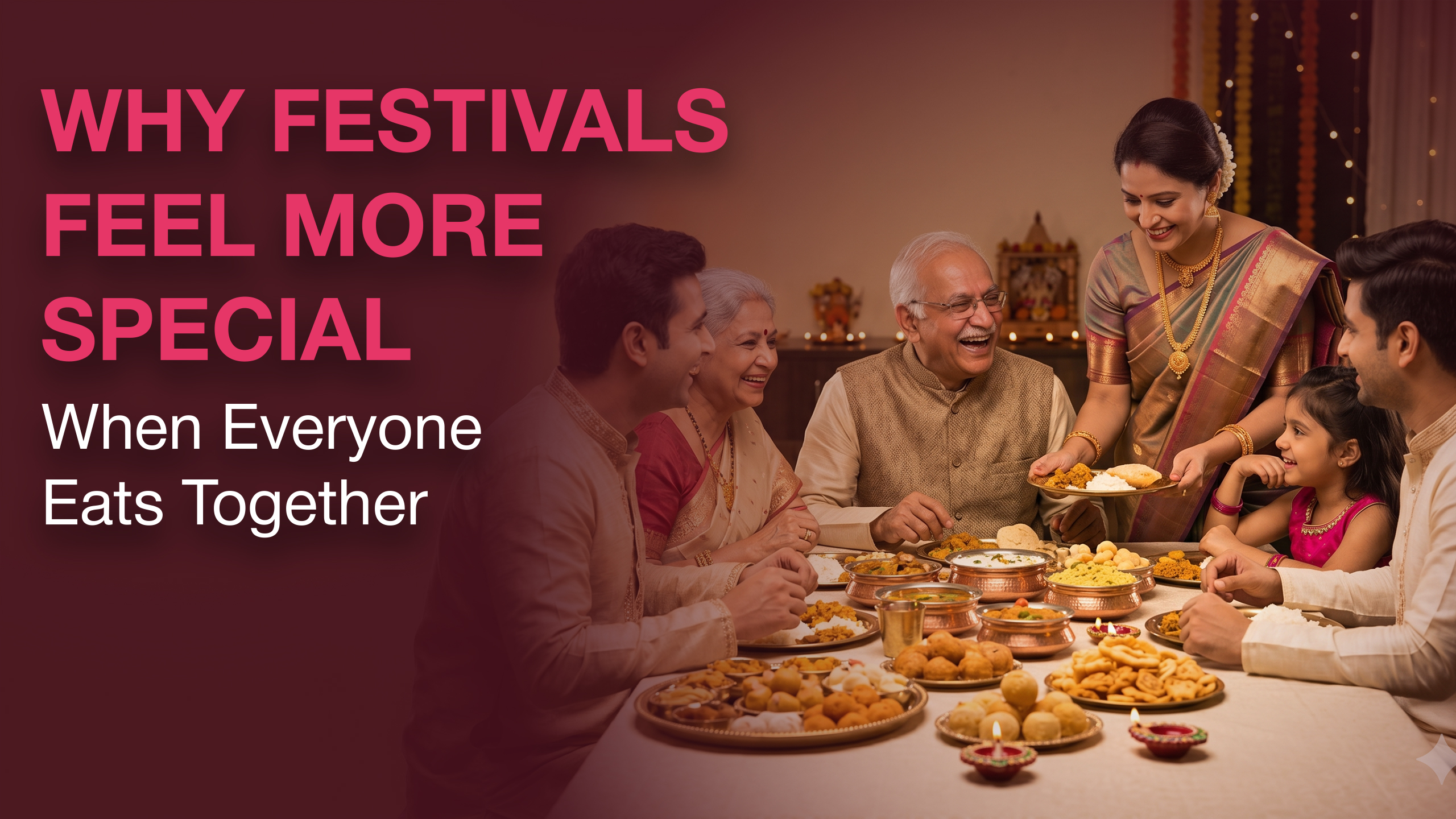
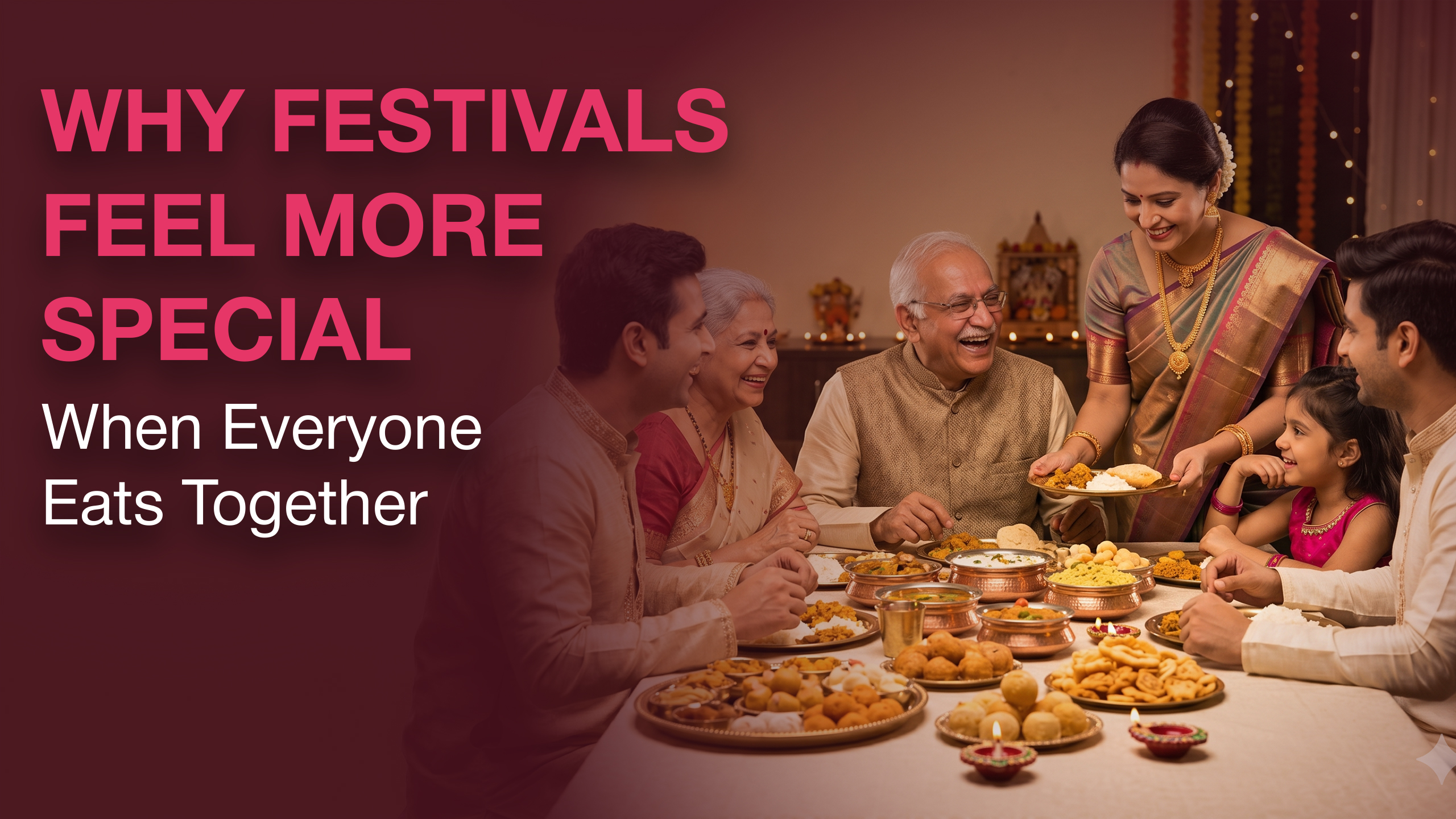
Why Festivals Feel More Special When Everyone Eats Together
Festival food is never just about the food
Every festival has food attached to it. Special dishes get made. Sweets come out. Snacks keep appearing from the kitchen. People ask each other to eat more than usual. But if you think about it, what people remember is rarely just the taste. They remember who was sitting there, who served extra, who kept talking through the meal, and who stayed back longer than expected.
That is why eating together during festivals always feels bigger than simply having a festive menu. The food brings everyone to one place, but the real memory is built around the people.
People stay together longer when there is a meal involved
On normal days, conversations can feel rushed. Someone is working. Someone is on the phone. Someone is moving in and out. A meal changes that. Once everyone sits down, there is nowhere else to go for a while. People naturally slow down. They talk more. They notice each other more.
This is one reason festival family meals often become the longest shared time people spend together during the entire day. Without planning it, the table becomes the center of the celebration.
Shared festive moments happen in the simplest conversations
No one usually remembers the formal festival wishes said in the morning. What stays are the random conversations during lunch or dinner. Someone brings up an old story. Someone laughs about a childhood incident. Someone complains about who made the sweets too sugary.
Nothing important is being discussed, but these shared festive moments make the day feel alive. The meal creates room for those conversations to happen naturally. Without that pause, the festival often becomes just another busy day with decorations.
Children remember these meals more than adults realise
Children may enjoy lights, gifts, and sweets. But what often stays with them is the full-house feeling. Seeing everyone at one table. Watching adults sit longer than usual. Hearing loud conversations while eating. Festival dining together quietly teaches children that celebrations are not only about rituals. They are about gathering.
This is how family bonding during celebrations becomes part of memory without anyone trying too hard to create it. Years later, many people remember the dining table before they remember the decorations.
Eating together slows the day down in a good way
A lot of festivals now move quickly. Morning greetings, errands, temple visits, photos, phone calls. Everything gets packed into a few hours. The meal is often the only part where people are forced to stop. They sit. They eat. They stay.
That pause changes the pace of the day. Meaningful family meals do something simple. They stop festivals from feeling mechanical. Researchers have also noted that shared meals strengthen social connection and create a stronger sense of belonging than quick interactions through the day. That is why one long meal can make the whole celebration feel fuller.
It is one of the few traditions people still enjoy naturally
Not every ritual feels equally exciting to everyone. Some people enjoy decorations. Some enjoy shopping. Some enjoy visits. But sitting together for food is one thing almost everyone participates in without effort. There is no pressure in it. Just people sharing time.
That simplicity is what makes it one of the most human parts of a festival, and it is also why platforms like Festivals for Joy continue to focus on the small habits that quietly make celebrations more meaningful.
Closing Thought
Festival meals are never remembered because the plates looked good. They are remembered because everyone stayed a little longer around them. A few extra conversations, a little more laughter, someone asking for one more serving.
These things sound small when they happen. But they are often the reason a festival feels complete later.