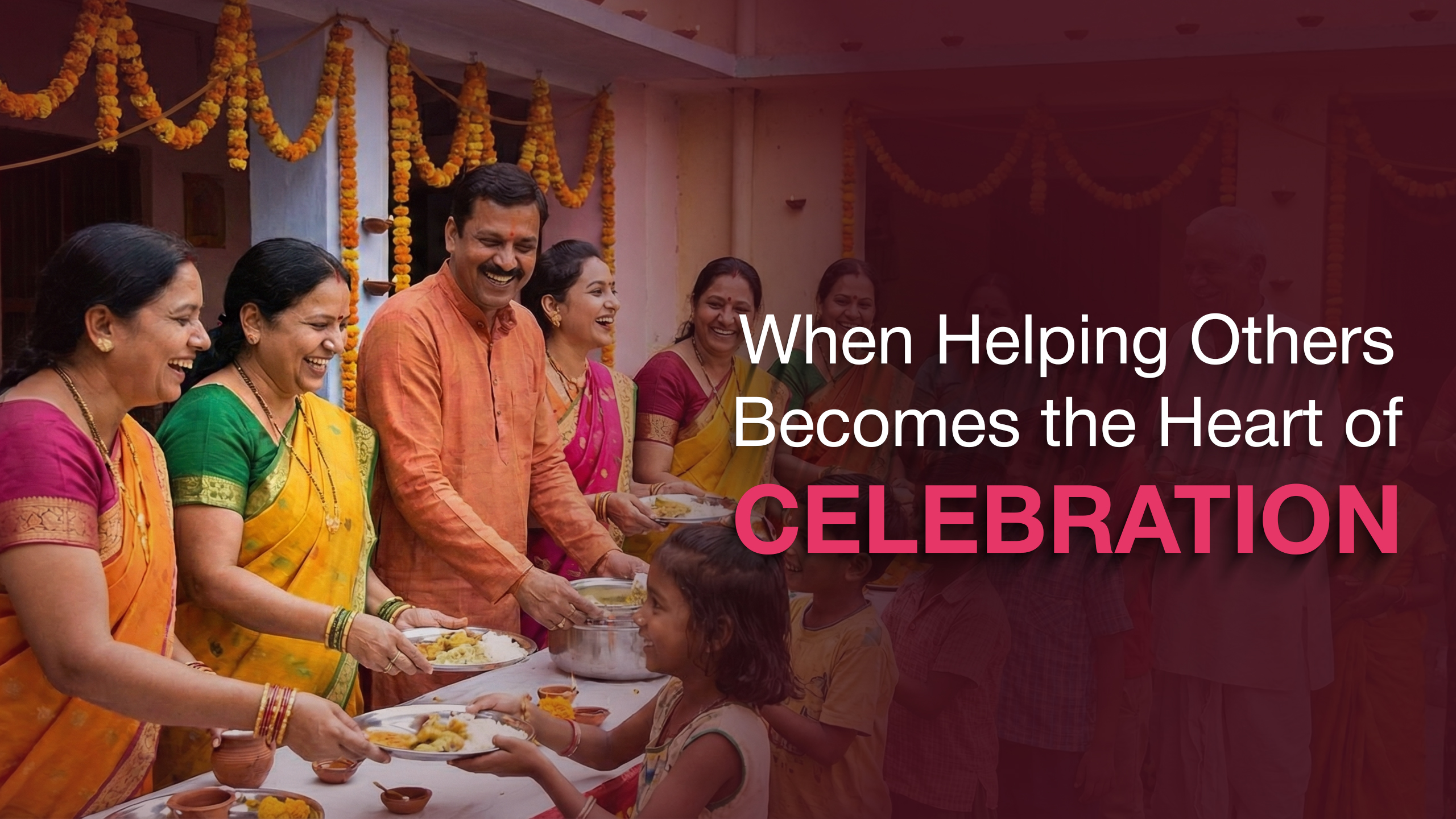
When Helping Others Becomes the Heart of Celebration
The simple fact of life is, celebrations usually begin with ourselves first. We plan the day. We think about what to wear, what to cook, who will come, and how everything should look.
That’s natural. Festivals are personal before they become shared.
But there’s a point in some celebrations where something shifts. It’s subtle. Nothing dramatic happens. And yet, the entire day starts feeling different. That shift usually comes when
attention moves away from us and towards someone else.
When the Focus Slowly Moves Outward
It might start with something small. Someone notices that a neighbour hasn’t joined yet. Someone sets aside food without being asked. Someone stays back to talk instead of moving on to the next thing. These actions are rarely planned. They don’t come from obligation. They happen because the space allows them to happen. That’s often when celebration stops feeling like an activity and starts feeling like a shared moment.
Helping Doesn’t Always Look Like Helping
Helping others during festivals doesn’t always mean doing something big. Most of the time, it looks ordinary. Sitting with someone who seems left out. Making space for a conversation. Including someone quietly, without announcing it.
These moments don’t draw attention. They don’t ask for recognition. But they change how people experience the day. The celebration feels warmer. Less rushed. More grounded.
Why Festivals Create Room for Care
Festivals slow things down in a way regular days don’t. Routines pause. People step out of their usual roles. Time feels less strict. In that space, people become more available to each
other. Helping others feels easier because the pressure to move on is lower. Presence becomes more important than productivity.
Research shows that helping others increases feelings of happiness and connection, especially when it happens naturally and without expectation. Festivals create that natural window where care feels normal, not forced.
When Joy Stops Being Individual
Some celebrations are remembered clearly years later. Others fade quickly, even if they
looked impressive at the time. What usually stays is not what was done, but how people felt.
Feeling included. Feeling noticed. Feeling welcome. When helping others becomes part of the celebration, joy stops being something personal. It becomes shared. People feel part of something larger than the event itself. That shared feeling is what lingers.
The Moments People Carry Home
People may forget the decorations. They may forget the programme. They may even forget parts of the day. But they remember who checked in on them. Who made them feel comfortable. Who stayed back when they could have moved on.
Helping others creates emotional memory. And emotional memory tends to last longer than visual memory. That’s why celebrations rooted in care feel more meaningful over time.
When Celebration Feels Lighter
There’s a belief that helping others adds responsibility to a celebration. In reality, it often reduces pressure. When the focus shifts from perfection to presence, expectations soften. Comparison fades. The need to perform disappears slowly. The celebration feels lighter because it’s no longer about doing everything right. It’s about being there for each other.
How Festivals for Joy Sees Celebration
At Festivals for Joy, celebration is not seen as something to be executed perfectly. It’s seen as a shared human experience. One that becomes richer when care, inclusion, and thoughtfulness are part of the moment. Helping others is not treated as an extra layer. It’s understood as something that naturally deepens joy when space is created for it.