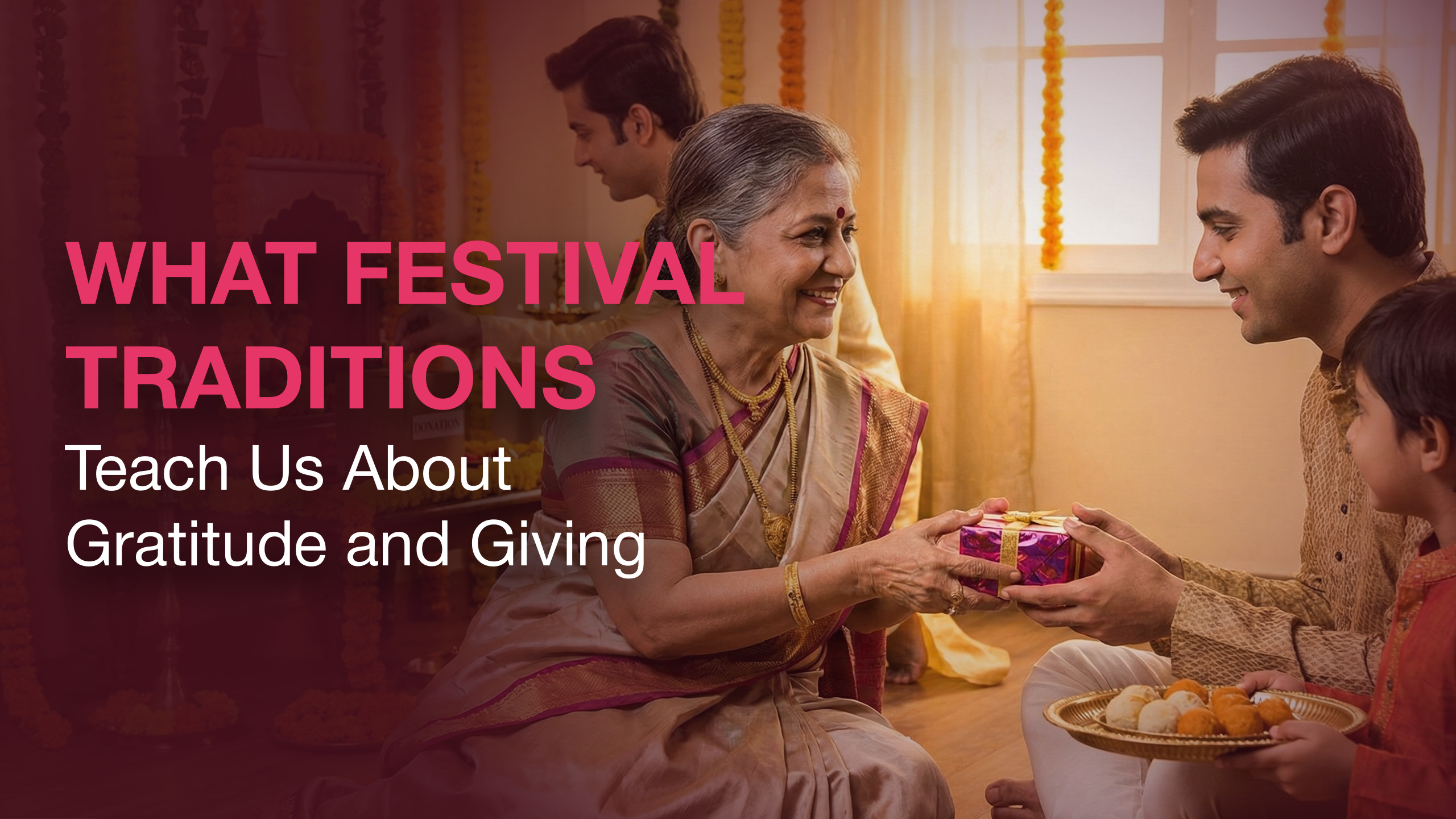
What Festival Traditions Teach Us About Gratitude and Giving
Festival traditions are usually learned, not explained.We grow up watching them happen. The same preparations. The same timings. The same small actions repeated year after year. Most of the time, we follow them without questioning why they exist.
But when we pause and look closely, many of these traditions quietly teach us how to be grateful and how to give, even when those words are never spoken out loud.
Traditions Slow Us Down Enough to Notice
Daily life rarely leaves room for reflection. Festivals interrupt that rhythm. They create a pause where routines change and attention shifts. In that pause, people notice things they usually overlook. The effort behind a meal. The presence of family. The fact that not everyone has the same comforts.
Traditions help anchor that pause. They create familiar moments where people come together without rushing through them. Gratitude often begins there subtly, mostly not as a concept, rather as a feeling.
Gratitude Is Built Through Repetition
Gratitude doesn’t always come from big realizations. Often, it comes from repetition. Lighting a lamp at the same time every year. Preparing food in a certain order. Visiting elders before sitting down to celebrate. These repeated actions end up reminding people of what they have in the present and who they share it with.
Over time, these moments shape how gratitude feels. It becomes less about saying thank you and more about recognizing value.
Giving Is Embedded in Many Traditions
Many festival traditions include some form of giving, even if it’s subtle. Sharing food.
Inviting others to join. Setting aside something before taking for oneself. These gestures are often treated as normal parts of celebration, not as special acts.
Because they are repeated every year, giving stops feeling like an obligation. It becomes part of how celebration works. That’s an important distinction. When giving feels normal, it feels sustainable.
Why These Traditions Stay With Us
People don’t always remember the details of festivals. They remember how it felt to be included. How someone shared without being asked. How care was offered quietly.
Psychological studies show that being there for others strengthens connection and personal wellbeing, especially when it happens naturally rather than as a duty. Festival traditions create those natural moments where giving feels unforced.
When Traditions Are Followed Without Awareness
Sometimes traditions are followed mechanically. They happen because they always have. In those cases, their meaning can fade. Gratitude turns into routine. Giving becomes symbolic instead of felt.
But even then, the structure remains. And with a little attention, those same traditions can regain their depth. All it takes is noticing what the tradition is trying to create, not just how it is performed.
How Traditions Shape Collective Behaviour
Traditions don’t just influence just an individual, they end up shaping the group as a whole. When entire families or communities repeat acts of sharing year after year, those behaviours become expected. Gratitude and giving turn end up into shared values of everyone instead of a individual’s personal choices. This is how festivals quietly influence culture. Not through rules, but through repetition.
How Festivals for Joy Looks at Traditions
At Festivals for Joy, traditions are seen as living practices, not fixed rituals.We see it as opportunities to reconnect with values like gratitude, care, and shared responsibility. When we go towards traditions with awareness, they feel more natural and not forced.
Celebration ends up becoming a space where gratitude is felt and generosity flows naturally, without needing to be highlighted or announced.
Closing Thought
Festival traditions do more than mark random dates on a calendar. They remind us, again and again, of what we have and what we can share. When followed with awareness, they gently teach gratitude and normalize giving.
That quiet learning is what allows celebrations to leave a lasting impression long after the day ends.